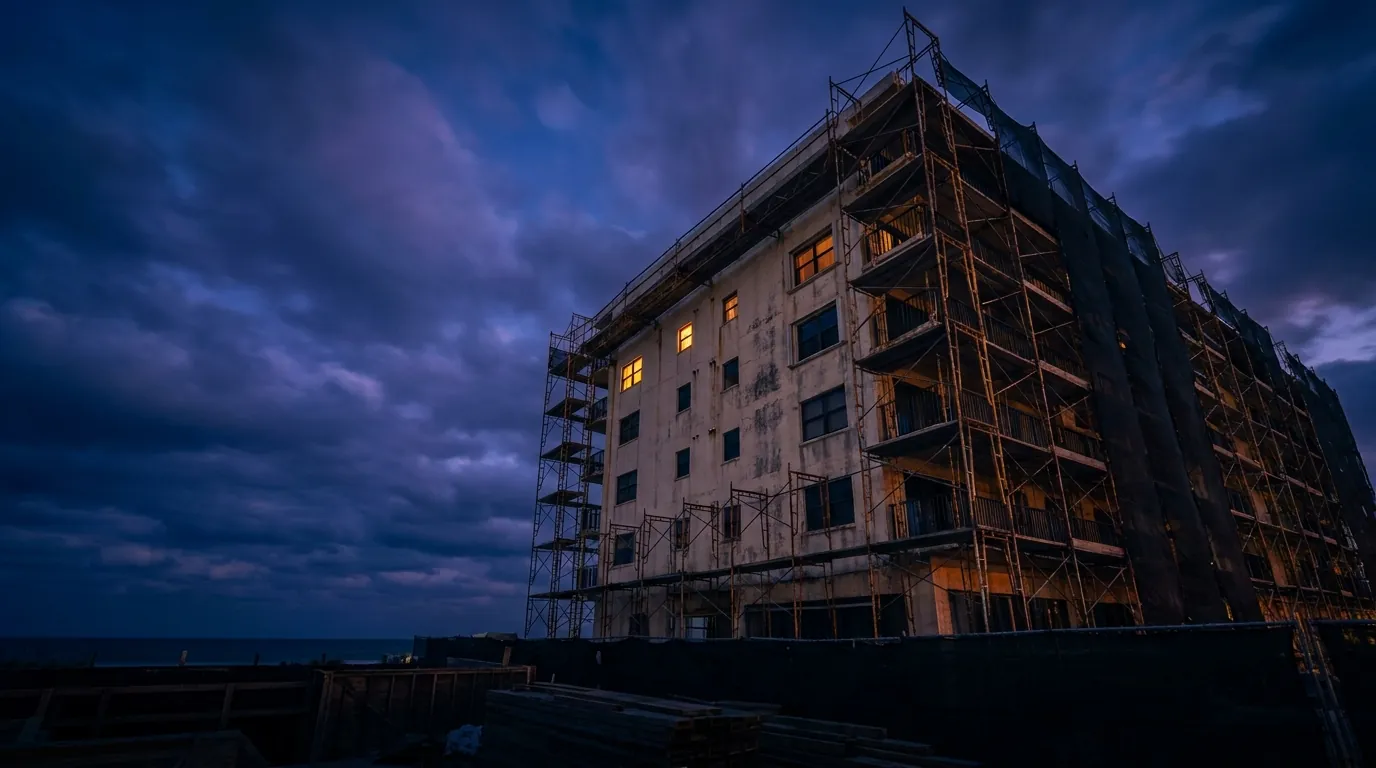
The engineer's report arrives, and it isn't good news. A parking garage slab needs replacing. Balconies have to come off the building one at a time. Or the SIRS reserve study says the roof has three years of life left and no money set aside to replace it. The number attached to the report is large enough that it doesn't fit the operating budget, doesn't fit reserves, and doesn't fit into a comfortable board meeting.
Under most bylaws, when the association doesn't have the cash on hand, the owners do. That's a special assessment: a lump-sum bill, divided by unit, due within a matter of months. For the board, it's the least comfortable letter there is to draft. For an owner on a fixed income, it can mean choosing between the repair and rent. For some, it means selling a home they've owned for twenty years to cover a bill that arrived with sixty days' notice.
Is a lump-sum shock to every owner really the only way to pay for a repair the building actually needs?
The alternative
A repair the building needs — without a lump-sum shock.
There is another way to pay for the same repair, and it doesn't start with a bill to every owner. Association-level financing lets the board borrow against the association itself — not against any individual owner's home, and not against any board member personally — and spread the cost of the repair over a much longer runway: up to 30 years instead of 90 days. Instead of one lump-sum check, an owner sees a modest addition to their monthly assessment. The roof gets fixed. The garage gets rebuilt. The reserve study gets funded. And the association's actual cash reserves stay where they belong — in reserve, for whatever comes next.
JPMorganChase has committed approximately $2 billion in financing capacity toward Florida association funding.
That's the kind of institutional weight that makes this a mainstream option for boards, not a workaround.
Tell us about the repair
Association size, the project, and your timeline. No personal financial information required from owners.
We structure it at the association level
The loan sits with the association — never with any individual owner or board member — and your reserve fund stays intact.
Owners pay one modest line item
Spread over a term of up to 30 years, instead of a single lump-sum bill due in a matter of months.
The same repair, two ways to pay for it.
Special assessment
$28,000
per unit, due in 90 days
Financed
~$180
per unit, per month, from
Illustrative example — every association's terms differ.
Actual amounts depend on the scope of the repair, association size, and the terms your lending partner offers. Rates and terms vary by lending partner.
How boards use this
The roof
A 120-unit Broward tower's milestone inspection turned up a roof with less than two years of life left, and a reserve fund that covered less than half the replacement cost. The board financed the difference at the association level instead of assessing owners for the balance. The roof was replaced on schedule; owners saw a modest increase to their monthly assessment instead of a five-figure bill.
Concrete restoration
A 64-unit Miami-Dade waterfront association found spalling concrete on balconies and the parking structure during a structural integrity reserve study. A special assessment would have landed near $30,000 per unit. The board financed the restoration instead, spread the cost over a multi-year term, and kept its reserve fund intact for the next scheduled project.
SIRS reserves
A 200-unit Palm Beach community's structural integrity reserve study revealed a significant funding shortfall ahead of the state's reporting deadline. Rather than a one-time catch-up assessment, the board financed the shortfall and folded the payment into the regular budget — bringing the reserve fund into compliance without a lump-sum ask.
Composite scenarios based on common board situations HOA Capital sees across Florida associations — not individual client case studies.
Questions boards ask first
Is this debt on owners personally?+
No. Financing is structured at the association level — it isn't a personal loan against any individual owner or board member. The association is the borrower, and the association makes the payments, funded the same way your budget already collects assessments.
What about our reserves?+
The point of financing a large repair is to avoid draining reserves to zero. Your reserve fund stays intact for its intended purpose — the next scheduled project — instead of being spent down or replaced by a special assessment.
How fast?+
Timelines vary by association and by the scope of the repair. Because we prepare your readiness package up front, your file is ready to move as soon as your board decides to proceed.
Does it need an owner vote?+
It depends on your governing documents — some boards can approve financing directly, others need an owner vote. Governance requirements vary by association; we help your board and counsel confirm what yours requires.
What does HOA Capital charge?+
Nothing to apply. We're compensated by our lending partners, not by your association, so there's no cost to find out what your community qualifies for.